.svg)
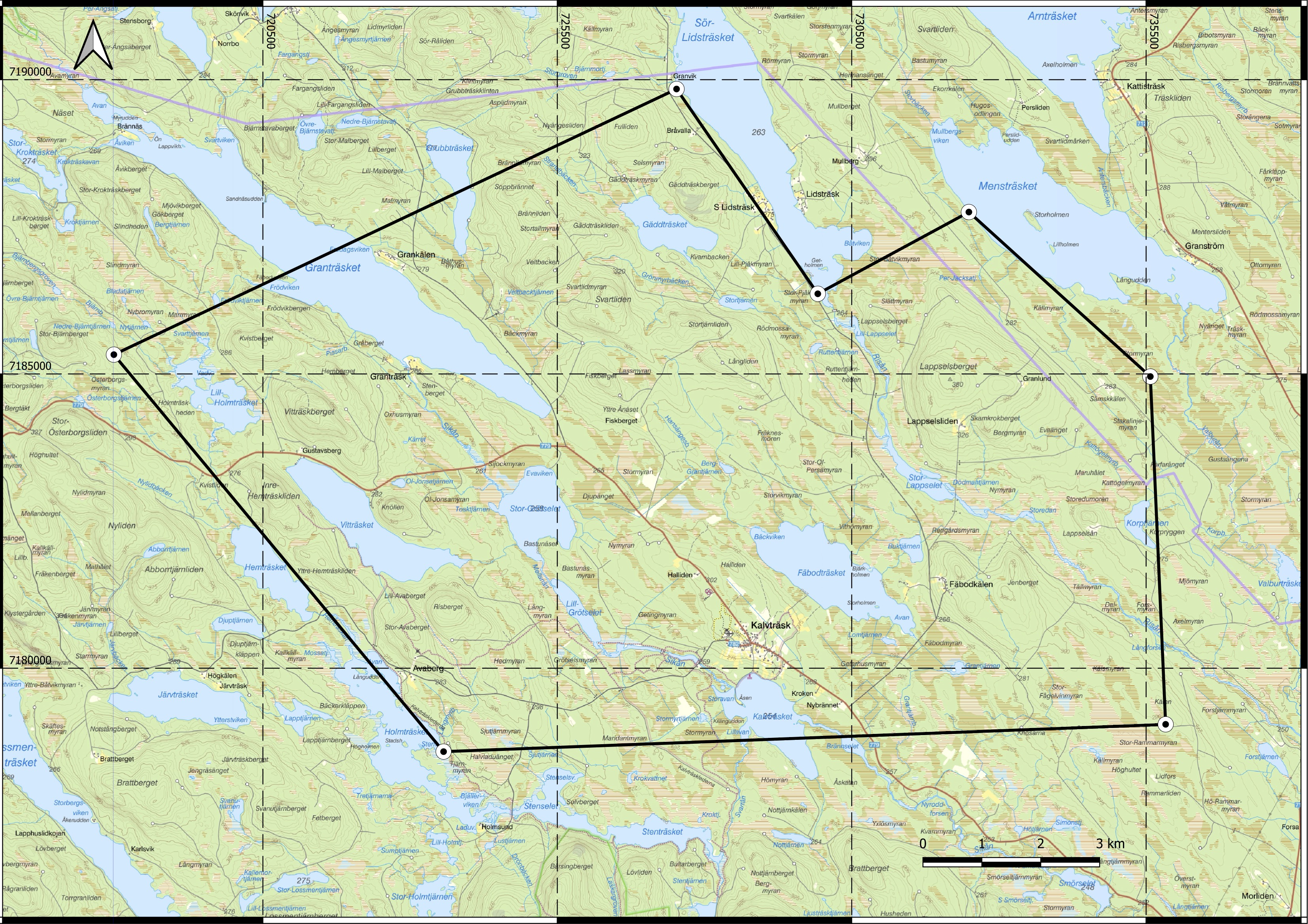
Location: Västerbotten County, northern Sweden
Permit Area: Approximately 7,000 hectares
Target Mineral: Gold, copper and silver

The Kalvträsk property covers approximately 7,000 hectares in Västerbotten County. The property is accessible via existing road networks and benefits from the well-developed mining infrastructure of northern Sweden, including established transportation corridors, low-cost hydroelectric power, and proximity to mineral processing facilities.
Kalvträsk is situated on the margin of the Skellefteå mining district, a volcanogenic massive sulphide (VMS) system that has produced significant gold, copper and silver from nearly 30 mines over the past century, the original Boliden mine alone yielding 128 tonnes of gold, 411 tonnes of silver and 118,000 tonnes of copper over its operating life.
The broader Västerbotten region is characterized by Paleoproterozoic volcanic and intrusive rocks prospective for multiple mineralization styles, and the strategic significance of the wider district was underscored in December 2025, when a nearby property was designated a 'Property of National Interest' by the Swedish Geological Survey (SGU), highlighting the region's importance at the national level.
The Kalvträsk property occupies a geologically favourable position on the margin of this major metallogenic belt, where the potential for undiscovered gold, copper and silver polymetallic mineralisation remains largely untested by modern exploration methods.

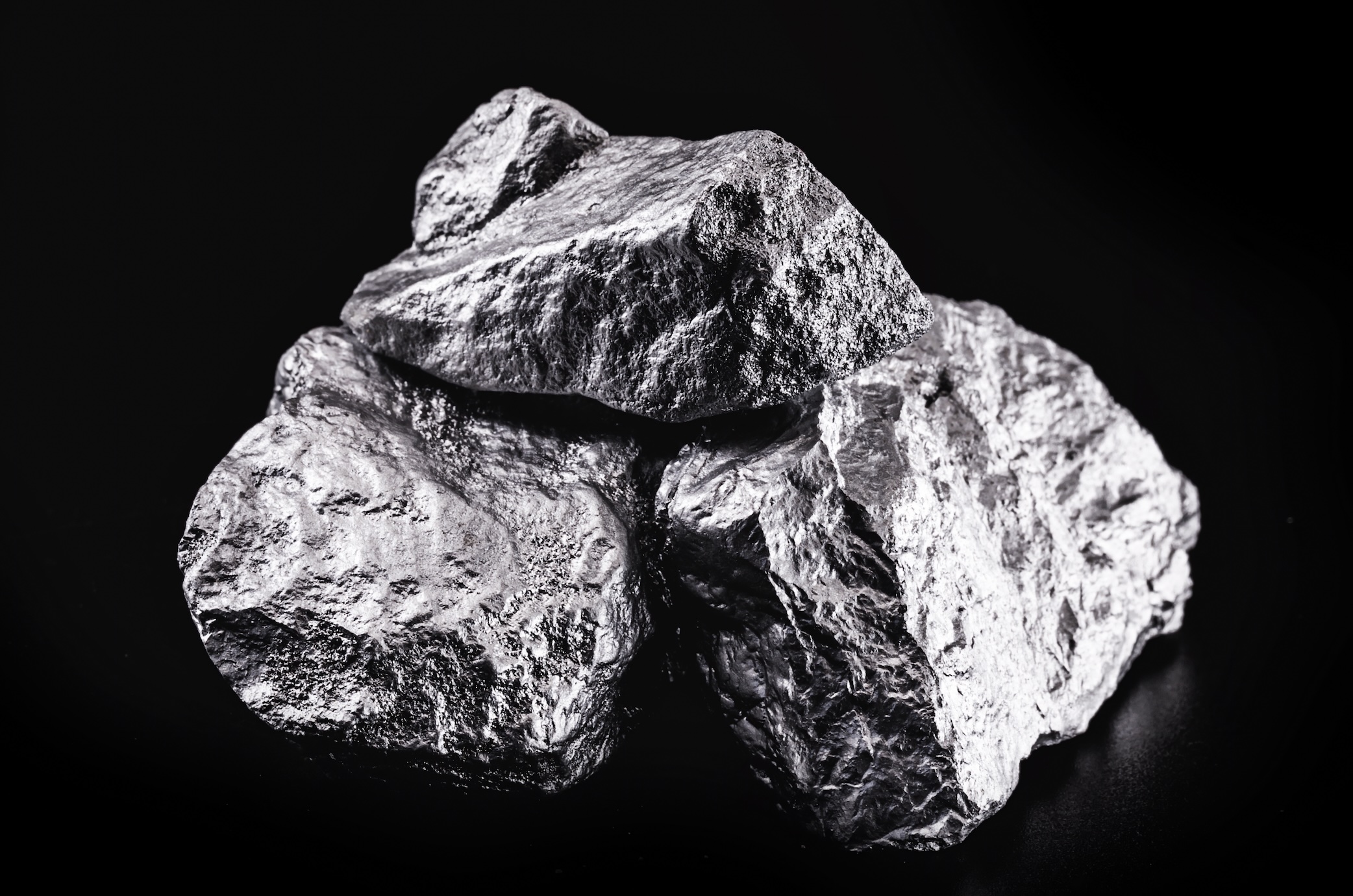
During the 1970s, four mineralised boulders were discovered within the Kalvträsk permit area. Assay results from these boulders returned gold grades between 4 and 20 grams per tonne (g/t Au), pointing to the presence of a mineralised bedrock source in the up-ice direction and reflecting the broader polymetallic character of the system, consistent with the gold-copper-silver assemblage seen across the wider Skellefteå district.
Boulder discoveries of this nature are significant in glaciated terrains such as northern Sweden, and systematic boulder tracing is a well-established and effective exploration technique in Scandinavian geology that has led to numerous economic discoveries in the region.
For Svea Mining, Kalvträsk represents a blue-sky opportunity with significant upside as the company applies modern exploration techniques to a system situated on the margin of one of Europe's most historically productive gold, copper and silver districts.
Svea Mining completed its inaugural field exploration program at Kalvträsk in October 2026. The program included systematic soil sampling across defined grids, rock chip and grab sampling of all accessible outcrop and mineralised float, strict chain of custody sample management throughout, and ongoing geological mapping with GPS-accurate coordinate recording. The Company plans to advance to a drill program targeting the most compelling geochemical and geological anomalies identified.
Cautionary Note: Historical boulder assay results are based on limited 1970s sampling and have not been independently verified. These results should not be relied upon as indicative of mineralization on the property. Exploration is speculative; there is no assurance that work will lead to an economic mineral deposit.